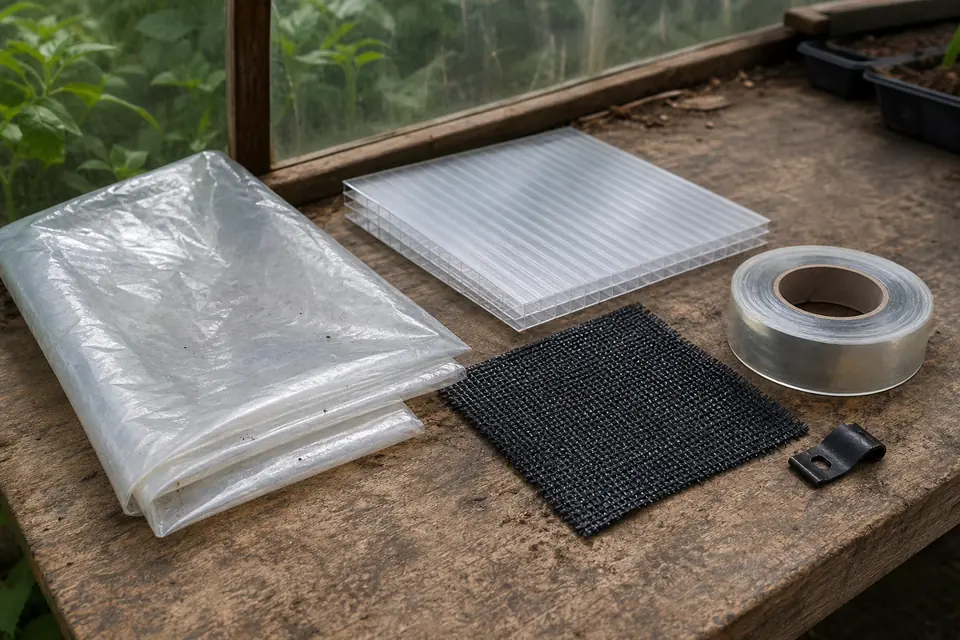
Five cost categories worth documenting
| Category | What belongs in it |
|---|---|
| Cover material | Film, panel or shade material in the correct size, grade and orientation. |
| Compatibility hardware | Channels, profiles, spring wire, tape, end closures, fasteners, inflation equipment or frame modifications. |
| Installation effort | Labor, safe access, weather window, tools and the complexity of doors, vents and endwalls. |
| Operating effect | The reason the cover is being considered: light management, heat-loss reduction, durability, ventilation compatibility or season extension. |
| Lifecycle work | Inspection, repair materials, removal or storage, expected replacement and disposal planning. |
Use a project comparison, not a product ranking
Create one row for each complete option. For example, a film system may include the correct film, a lock channel or battening approach, endwall treatment and a replacement interval. A panel system may include panels, compatible profiles, tape, end closures, support detailing and a different frame requirement. Neither row is complete until the accessories and installation needs are visible.
Cost is a decision constraint, not the only criterion
A lower upfront option may fit a seasonal tunnel and a planned replacement cycle. A higher upfront envelope may fit a long-term structure. The useful comparison is whether each option serves the project you actually intend to operate.
A simple decision rule
- Eliminate options that are not compatible with the structure or local requirements.
- Eliminate options with missing manufacturer documentation.
- Price each remaining option as an installed system.
- Compare lifecycle work against the intended years of operation.
- Choose the option whose trade-offs you can inspect and manage.
Common questions
Should I calculate a cost per square foot?
It can help compare material quantities, but it is incomplete on its own. Add the system hardware, installation work and expected replacement plan before deciding.
Can energy savings be guaranteed from a cover change?
No. Energy outcomes depend on the existing structure, climate, controls, setpoints, air leakage and the installed system. Treat case studies as context, not a project guarantee.