The difference is the air space and its upkeep
A double-poly greenhouse cover generally uses two film layers kept apart by a small, continuously maintained air space. That air space is the point: it reduces conductive heat loss relative to a single layer. It also creates a system with an inflation blower, pressure management, film attachment and a need to monitor whether the layers remain properly separated.
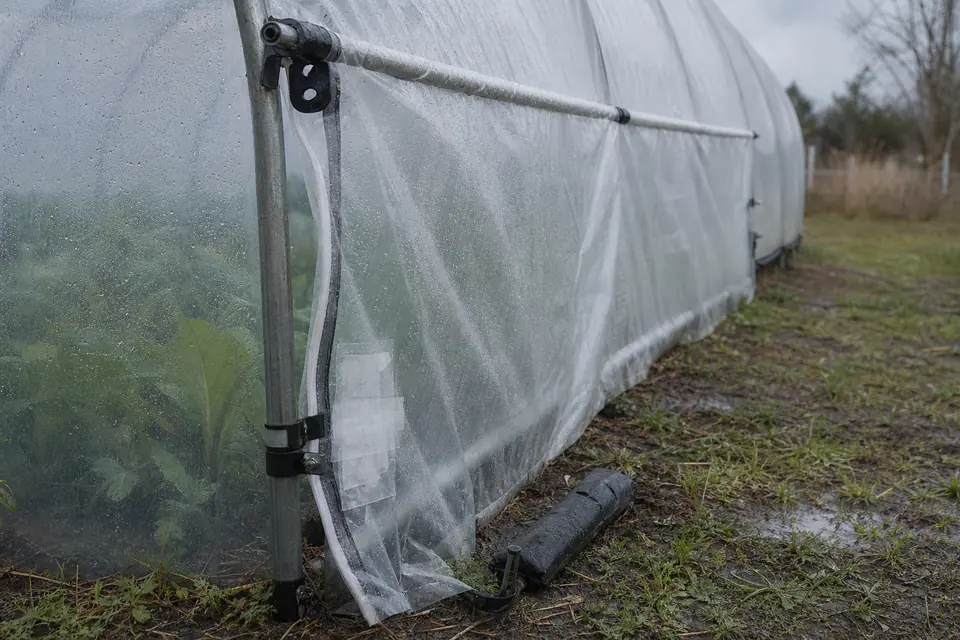
A single layer has fewer components and is common in high tunnels. Penn State describes high tunnels as generally covered with one layer of greenhouse-grade, six-mil polyethylene, in contrast to air-inflated double polyethylene found in greenhouses. That statement describes a common construction pattern; it does not prohibit other designs.
Match the cover to the operating calendar
| Question | Single layer | Air-inflated double layer |
|---|---|---|
| Typical context in extension guidance | High tunnels and structures that rely heavily on passive ventilation. | Greenhouses with a managed envelope and an air space between film layers. |
| System complexity | Less cover hardware, but still needs reliable fastening and seasonal inspection. | Adds inflation hardware, power dependence and monitoring of layer separation. |
| Core reason to choose | Simplicity, a compatible high-tunnel build or seasonal use pattern. | Heat-loss reduction where the added system fits the budget and management plan. |
What the energy examples actually say
UMass Extension's energy-conservation checklist recommends double covering as one measure, describing the thermopane effect from an air space. It also states that adding one or two layers of plastic over older glasshouses can reduce infiltration and heat loss by 50%, and that a thermal blanket can produce a stated 20-30% saving in its context. These are not interchangeable project guarantees: the baseline structure, fuel, control strategy and leakiness matter.
A separate UMass worked example assumed a 30 by 96 foot Connecticut hoop house with double poly on the roof, polycarbonate endwalls and a 60 F night setpoint. Under those stated assumptions, changing one conventional film layer to IR film produced an average stated seasonal saving of 12%. The useful lesson is that film type, layer arrangement and the rest of the envelope all matter together.
Do not install a second layer without a ventilation plan
High tunnels and greenhouses can overheat quickly. Penn State notes that high tunnels commonly rely on passive ventilation. Covering choices need to be planned alongside sidewalls, doors, vents and how the structure will be opened on warm days.
Before moving from one layer to two
- Confirm that the frame and fastening system are compatible with the selected film and inflation method.
- Price the blower, electrical supply, replacement parts and ongoing inspection, not just the second sheet.
- List the months and night temperatures that make the extra complexity worthwhile for your operation.
- Check that vents, roll-up sides and access points can still work as intended.
- Read the film manufacturer's warranty and cleaning/chemical compatibility instructions.
Common questions
Does double-layer film need a blower?
Air-inflated double-film systems need a way to maintain the designed air space. Use the selected system's installation instructions for its required equipment and setup.
Is double film right for every high tunnel?
No. A high tunnel's frame, ventilation approach, season of use, power availability and management capacity all affect whether a double-film system fits.